Top Blogs

Jumat, 18 Juli 2008

Serena through to face Mauresmo


Wimbledon: Monday 23 June to Sunday 6 July
Coverage:
BBC TV, BBCi, Radio 5 Live and the BBC Sport website.


Serena Williams
Serena reached the quarter-finals of Wimbledon last year

Serena Williams cruised into the third round of Wimbledon despite not being at her best against Urszula Radwanska.

The 2002 and 2003, was still too strong for the Polish 17-year-old, winning 6-4 6-4 to set up a clash with France's 2006 champion Amelie Mauresmo.

Sixth seed Williams admitted that she was happy not to add to Court Two's "graveyard of champions" reputation.

"I felt I played OK. I was a little tight out there and just didn't want to go out on Court Two," she said.

"I never really think about that playing on Court Two but that did kind of cross my mind. It was windy and the conditions weren't great.

"I felt like I should just get it over with."

The first set was one-way traffic initially as Williams broke in the third game and again in the fifth to take a 4-1 lead.

Radwanska, ranked 190th in the world and playing in her first Grand Slam, gradually got into the game - hitting back with a break - but Serena was still able serve out for the set.

Serena claimed an early break in the second set and, although Radwanska broke back, the American sixth seed broke one more time to seal the win.

She will now take on Mauresmo in the next round after the French 2006 Wimbledon champion battled back from a set down to beat Spain's Virginia Ruano Pascual 4-6 6-1 6-1.

Mauresmo has played Serena twice before at Wimbledon, losing both of their semi-final matches in 2002 and 2004.

606: DEBATE

"I haven't played her in a while. I look forward to it. I had no idea I might play her. I'm excited about that," added Serena.

"She's been struggling a lot this year. So you can only hope that she does well, especially being a past champion here. It will be a good match."

Fourth seed Svetlana Kuznetsova took little over an hour to dispose of Ukrainian Kateryna Bondarenko 6-2 6-3.

The 22-year-old Russian, who struggled in her first-round match against Mathilde Johansson, never looked back after claiming two early breaks in each set.

"I think I did everything to have it easier," said the 2004 US Open champion, who has reached the Wimbledon quarter-finals three times.

"I played much better, and I was just playing a little bit more like you should play on grass, not on clay court. For me it's difficult to adjust.

"I was really happy with everything except my serve. I could not get my serve in as much as I would like to.

"I was maybe wanting to do too much with this, and I wanted to go more forward, which I think I did pretty well."

Last year's surprise finalist Marion Bartoli defeated Tatiana Perebiynis 6-2 7-5 in their second-round match.

Russian eighth seed Anna Chakvetadze had little trouble in advancing, beating Romania's Edina Gallovits 6-4 6-2.

Czech Republic's 18th seed Nicole Vaidisova survived a major second-set blip to overcome Australian Samantha Stosur 6-2 0-6 6-4.

Italian 20th seed Francesca Schiavone crashed out, losing her match with Spain's Anabel Medina Garrigues 3-6 7-5 9-7.

In the first round, Russian fifth seed Elena Dementieva progressed with a 6-3 6-7 (7-9) 6-3 win over Maria Elena Camerin of Italy.

Davenport drops retirement hint


Lindsay Davenport
Davenport returned to action last September after becoming a mother

Former champion Lindsay Davenport has hinted that she might have played her last Wimbledon after pulling out of this year's event with a knee problem.

The 1999 champion was due to play Gisela Dulko in the second round on Thursday, but withdrew hours before with the ongoing injury.

Davenport told BBC Sport: "I would be surprised if I was back here playing.

"I am looking forward to the Olympics and playing the US Open. After that there are not a lot of plans."

On Tuesday, in her first match at Wimbledon since 2005, Davenport hobbled past Renata Voracova 6-3 5-7 6-3.

The 32-year-old had been idle for two months after sitting out the clay-court season. She withdrew from the warm-up tournament at Eastbourne last week.

"After my match I went to the hospital for an MRI scan which came out looking good but it showed I had inflammation behind the knee cap.

"At first that was a major relief and no immediate danger, but it was just really inflamed and painful," she said.

"I rested all day on Wednesday and wanted to see how I was but after a warm-up I felt 20-30 % which is not good enough - so it's prescribed rest.

"It's not an easy decision to make but in the second round I want to be 100% and have a chance to win and not just hope to get through another set or another round.

"I worked hard to get back here but it's just the way it goes.

"The diagnosis is three to four weeks I should be fine. I was concerned about the Olympics 48 hours ago but the doctors are confident."

Dulko receives a walkover into the last 16 where she will play Russia's Elena Dementieva.

Keothavong blows Classic chance


Anne Keothavong
Keothavong was a double break up at one point in the third set

British number one Anne Keothavong squandered the chance to reach the last eight of the Bank of the West Classic as she lost to Marion Bartoli.

The 24-year-old threw away a potential match-winning position against the 2007 Wimbledon runner-up.

Keothavong was 4-1 up in the deciding set and heading for the quarter-finals but then lost four straight games.

Although she levelled at 5-5, she could not stop the world number 15 closing out a 6-3 1-6 7-5 victory.

Bartoli raced through the first set after taking a 3-0 and 4-1 lead.

However, the second set was an entirely different matter, with Keothavong in complete control.

Bartoli held serve to go 1-0 up in the decider but Keothavong won the next three games to appear on course for another highly impressive victory following her defeat of world number 33 Sania Mirza in the first round.

606: DEBATE
Nole-For-King

However, Bartoli produced an excellent fightback to move into a quarter-final meeting with world number eight and second seed Anna Chakvetadze.

Bartoli said: "From one double break down it was almost the end for me.

"I decided I was going to win this match whatever it takes. Anne was playing so well from the baseline and was hardly missing one ball.

"It was hard to do it but I was able to get those winners."

Meanwhile, fifth seed Patty Schnyder was a 7-6 (10-8) 6-4 winner over Russia's Alisa Kleybanova and the Swiss star will now face Serena Williams.

Samantha Stosur is also through after upsetting Russian third seed Vera Zvonareva 6-3 6-2 and will now face Canadian qualifier Aleksandra Wozniak.

The Australian, who got her place in the tournament after Lindsay Davenport pulled out, quickly found her stride and overpowered Zvonareva with a huge serve and clean groundstrokes.

"I really made the most of my opportunity getting in," said Stosur, who ended the match by serving four ace

Nazi hunter: Closing in on 'Dr. Death'

BUENOS AIRES, Argentina (AP) -- The world's top Nazi-hunter said Thursday he's made progress in finding 94-year-old "Doctor Death," a former concentration camp physician accused of torturing Jewish prisoners as they died and who may have been living for decades in Argentina or Chile.

Efraim Zuroff: "People under pressure make mistakes."
Click to view previous image
1 of 2
Click to view next image

Efraim Zuroff, head of the Israeli branch of the Simon Wiesenthal Center, told a news conference that his mission to the southern reaches of the Americas led him to at least four people who claim to have seen Aribert Heim in the past 45 days.

"We're better off than before we came," Zuroff said. "That doesn't guarantee Heim's capture, but I'm hopeful."

Zuroff launched the investigation last week in the southern Chilean fishing town of Puerto Montt, where Heim's daughter lives, although she was reportedly overseas at the time.

Zuroff said during the past three years Heim's daughter has traveled several times to the Patagonian town of San Carlos de Bariloche in Argentina, which he visited this week. The Nazi hunter believes Heim is hiding out somewhere between the two towns, separated by the Andes mountain range.

"There is increasing pressure on Heim and on his family," Zuroff said Thursday. "People under pressure make mistakes," he added.

Zuroff told The Associated Press that the Puerto Montt trip was a "turning point" because he was able to speak face-to-face for the first time with acquaintances of Heim's daughter and raise awareness among locals.

"These are people who brought us specific details that gives us something concrete to latch onto," said Sergio Widder, the center's Latin American representative. He declined to elaborate.

Heim was indicted in Germany after World War II on charges he murdered hundreds of inmates at the Mauthausen concentration camp in 1941. The Wiesenthal center says he injected the corrosive poison phenol directly into the hearts of many and used "other torturous killing methods."

Zuroff says Heim's children have made no claim to a bank account with euro1.2 million (US$1.6 million) and other investments in Heim's name. To do that, they would have to produce proof that "Doctor Death" is dead.

He said he's been tracking recent requests by Heim's lawyers for legal documents related to his estate that "would have no value if he is dead." He would not give details.

A reward of euro315,000 (US$495,000) is being offered jointly by the center, the German and Austrian governments and a private donor for information leading to his capture. Heim tops the Wiesenthal Center's list of most-wanted Nazi war criminals.

Zuroff met Thursday morning with Argentine Justice Minister Anibal Fernandez, who said the government will facilitate Heim's arrest and extradition if Heim is found in the country.

Although World War II ended more than 60 years ago, the center continues to take on new cases as Nazi sightings surface. Between March 2007 and 2008, the Wiesenthal Center opened 202 new investigations, Zuroff said.

The South American probe is part of the Jewish human rights organization's "Operation: Last Chance" -- an effort to bring aging war criminals to justice before they die. If alive, Heim would be 94.

Answering critics who say Heim's age undermines the validity of the hunt, Zuroff said to "keep in mind what he did when was a very young person."

"If we put a limit on age, in a practical sense that means we're saying you can get away with genocide, which is morally outrageous," he added.

After World War II, Heim was held for two and a half years by the United States military but was released without being tried.

He disappeared in 1962 after he was tipped off that German authorities were about to indict him, Zuroff said

Pelosi: Bush 'a total failure'

By Alexander Mooney
CNN
Decrease font Decrease font
Enlarge font Enlarge font

(CNN) -- House Speaker Nancy Pelosi called President Bush "a total failure" on Thursday, among the California Democrat's harshest assessments to date of the president.

House Speaker Nancy Pelosi says "I disapprove of Congress' performance in terms of ending the war."

House Speaker Nancy Pelosi says "I disapprove of Congress' performance in terms of ending the war."

"God bless him, bless his heart, president of the United States -- a total failure, losing all credibility with the American people on the economy, on the war, on energy, you name the subject," Pelosi told CNN's Wolf Blitzer in an exclusive interview.

The comments came two days after the president sharply criticized Congress over what he described as relative inaction over the course of the legislative term. At the White House on Wednesday, Bush noted that there were only 26 legislative days left in the fiscal year and said Congress would need to pass a spending bill every other day to "get their fundamental job done."

"This is not a record to be proud of, and I think the American people deserve better," Bush said. Video Watch Pelosi respond to criticism of Congress from the president »

In the interview, Pelosi said the president was in no position to criticize Congress and brushed aside the criticisms as "something to talk about because he has no ideas."

"For him to be challenging Congress when we are trying to sweep up after his mess over and over and over again -- at the end of the day, Congress will have passed its responsibility to pass legislation," she said.

But Pelosi's comments come as a new Gallup poll registers the lowest level of congressional approval among Americans in the polling organization's 30-year history of conducting that survey.

That poll showed that its approval rating had reached an anemic 14 percent, while more than 70 percent of those polled said they disapproved of the job Congress is doing.

The House speaker said she doesn't consider those numbers a negative referendum on the Democrats in charge, saying she thinks they stem largely from Congress' failure to end the war in Iraq.

"Everything I see says this is about ending the war -- 'I disapprove of Congress' performance in terms of ending the war,' " she said. "In the House, we, of course, have over and over, five or six times, sent to the Senate legislation for a time certain to reduce our deployment in Iraq and bring our troops home safely, honorably and soon. We haven't been able to get it past the Senate or the president of the United States.

"So, on the basis of that, count me among the 70-some percent," she continued. "But that is one measure. The other measure that I'm more interested in is the one that talks about what is their view of Democrats. And the generic, who do you prefer to run the country on all of these issues? We're in double digits in any poll that you can take."

Republican National Committee spokesman Alex Conant derided Pelosi's comments as "the sort of partisan politics that Democrats once decried and promised to change."

"Rather than personally critique others, Speaker Pelosi should reconsider her own out-of-touch stance against oil exploration," he said. "With Americans paying record prices at the pump and Congress in gridlock, this is no time for the speaker to only offer personal attacks."

In the wide-ranging interview, the entirety of which will air Sunday on CNN's "Late Edition with Wolf Blitzer," Pelosi also reiterated her longtime opposition to lifting a congressional ban on offshore drilling as well as opening up areas such as the Arctic National Wildlife Refuge in Alaska for oil exploration. Bush and congressional Republicans have pushed for those two policy changes.

Pelosi has long opposed drilling offshore, a popular policy position among Californians, many of whom fear its environmental consequences along the state's coastline.

But a recent CNN/Opinion Research Corp. poll showed that more than 73 percent of Americans polled approved of lifting the 1981 ban, and the move holds support among many in Pelosi's own party, whose constituents are growing increasingly angry over rising gas prices.

Pelosi said the oil industry is not aggressively exploring large amounts of federal areas already leased to them and approved for drilling, including 33 million offshore acres and 68 million acres in the lower 48 states. She has sponsored legislation calling on oil companies to increase their production in those areas before they are allowed to go into the offshore areas currently banned.

"Thirty-three million acres offshore are allowed for leasing," she said. "And we're saying to them, use it or lose it. You have the opportunity to drill there. When you have exhausted those remedies, then you can talk about something else."

She's also calling on the president to release 10 percent of the more than 700 million barrels of oil housed in the country's Strategic Petroleum Reserve.

Bush said Tuesday that he is against any release from the reserve, saying that stash is for emergencies only. He also disputed that it would have any effect on lowering gas prices.

"What we are saying is, Mr. President, free our oil from the Strategic Petroleum Reserve," Pelosi said. "We're saying, let's take 10 percent of that, which has been paid for by the American taxpayer, and use that to put on the market so that we increase supply, reduce price."

"And when the price comes down, we can buy back the oil at a lower price, put it in the SPR, use the spread for renewable energy resources."

The House speaker has faced heavy criticism from House Republican leader John Boehner, who is leading a congressional delegation to ANWR this weekend and has said Pelosi's action does not adequately address the problem.

Aussie TV reporter in Singapore drug arrest

SINGAPORE (AP) -- An Australian television journalist has been arrested in Singapore for alleged drug possession and faces up to 20 years in jail and 15 strokes of the cane, police and his employer said Friday.

The Central Narcotics Bureau said the man was arrested Wednesday but did not identify him. Australia's national television network, Australian Broadcasting Corp., said it was their New Delhi-based South Asia correspondent, Peter Lloyd.

Officers seized a packet of methamphetamine weighing approximately 0.03 ounces, an improvised smoking pipe and six syringes, the narcotics bureau said in a statement. Lloyd, 41, was expected to be charged in court Friday.

Singapore imposes severe penalties for drug use and possession, including a mandatory death penalty for anyone caught with more than 0.5 ounces of heroin or more than 17.6 ounces of marijuana. The death penalty does not apply to synthetic drug possession.

A statement from the director of ABC News, John Cameron, said Lloyd was on leave in Singapore. The reporter has been the face of ABC's coverage from India and Pakistan, appearing regularly on the network's nationally broadcast daily news.

The narcotics bureau said Lloyd was arrested during a follow-up search after a Singaporean man was arrested earlier in the day for alleged possession of methamphetamine. An investigation revealed that Lloyd had supplied the Singaporean with the drug, it said.

Lloyd faces five to 20 years in prison and five to 15 strokes of the cane if found guilty.

UK sprinter fails in bid to beat Beijing ban

LONDON, England (CNN) -- British sprinter Dwain Chambers has failed in his London High Court bid to compete at the Beijing Olympic Games.

Dwain Chambers pictured ahead of his High Court appearance in London.

Chambers, 30, had appealed against a lifetime ban from competing in the Olympics imposed by the British Olympic Association following a two-year suspension from athletics for failing a drugs test.

Chambers, who served his doping ban between 2003 and 2005, was seeking a temporary injunction against the BOA, which bans all doping violators for life from Olympic competition.

Judge Colin Mackay announced his ruling Friday after listening to all the evidence in a hearing Thursday. Mackay ruled last week that there was not enough time to hear the full case until after next month's Games in China.

The judge noted during the hearing that the sprinter would know that being caught taking steroids resulted in a life ban from the Olympics.

The sprinter's lawyers argued that Chambers had expressed regret for his past behavior and deserved a place in Beijing, adding that he would strengthen Britain's 100-meter squad.

However, Mackay concluded Chambers had little chance of winning a medal in Beijing and that it would be unfair to deny an opportunity for a clean athlete to compete.

The judge added that the harmony of the British team would be upset if Chambers was included.

"It's a matter of great regret that Dwain Chambers, an athlete with such undoubted talent ... should by his own actions have put himself out of the running to shine on the Olympic stage," said Colin Moynihan, chairman of the British Olympic Association (BOA), after the verdict.

"Nobody found guilty of serious drug cheating offenses should have the honor of wearing a Team GB jersey."

Chambers, who competed at the 2000 Olympics in Sydney, tested positive for the banned steroid THG in late 2003.

But he has staged a remarkable comeback since serving his two-year ban, reaching the medals podium at the World Indoor Championships in March and running 10.00 seconds in the 100 meters over the weekend at the British Olympic trials -- just three one-hundredths of a second off his personal best, which he achieved in 1999.

Chambers' case has divided the sporting world. His lifetime ban is backed by British Olympians including five-time rowing gold medalist Steve Redgrave, Kelly Holmes, who won gold at 1,500m and 800 meters in Athens in 2004, and London 2012 Chairman Sebastian Coe, a former runner who won gold for Britain at the 1980 Moscow Games and 1984 Los Angeles Games.

"I've heard for far too many years that the primary concern is for the athlete. Actually it's not," Coe told the Daily Telegraph this month.

"The primary concern is the well-being of the sport. If you don't have that, the athletes can go home. What you are doing with this bylaw is protecting the 99 per cent of athletes who choose to do this for the right reasons."

But supporters of Chambers include U.S. athlete Edwin Moses, who won two Olympic gold medals in the 400-meter hurdles. Several British papers have quoted Moses saying the ban is unfair to Chambers as an athlete.

A full hearing on the bylaw is expected in March. It was not clear whether Chambers planned to appeal Friday's ruling.

The BOA has vowed to "vigorously" defend the rule, which states, "Any person who has been found guilty of a doping offense (shall not) thereafter be eligible for consideration as a member of a Team GB," the name for the British Olympic team.

Naples trash clean-up 'under way'

NAPLES, Italy (CNN) -- The Italian prime minister plans to declare Friday that the worst part of a garbage crisis in Naples is over -- even though a visit to one neighborhood found residents still living amid huge piles of trash.

Garbage has been piling up in the streets of Naples since a municipal dump was closed on Dec.

Prime Minister Silvio Berlusconi is due to make the announcement after a cabinet meeting in Naples, according to the national ANSA news agency. He is expected to say that the first phase of his government's response to the crisis -- the emergency phase -- is over.

That first phase has involved cleaning up rotting garbage that has accumulated in the streets since the government closed one of two dumps in this southern Italian city.

Now Berlusconi plans to focus on the second phase of his response to the garbage crisis. That involves long-term solutions, such as implementing a viable system of garbage collection, incineration, and recycling.

Despite the prime minister's planned announcement, however, a CNN correspondent who visited one neighborhood on the outskirts of Naples on Friday found residents still tossing garbage into the street. They said they had nowhere else to put it and complained of a lack of trash bins and recycling facilities.

The piles were smaller than a few months ago, and the odor was not as bad, but the visit demonstrated that Berlusconi and his government have a long way to go in addressing the crisis.

The prime minister told the ANSA news agency that the government had made great strides in addressing the problems.

"Besides the 7,000 tons collected per day," he said, "we have collected 35,000 tons that were left unaddressed."

Naples' garbage problems have been around in some form for nearly 15 years, but they flared December 31, when the Italian government closed one of the area's two working dumps at the request of nearby residents.

As trash piled up, officials closed some schools to protect children from noxious fumes.

China to halt flights for Olympic launch

BEIJING, China (AP) -- Airlines are being told to stay away from Beijing's airport during the opening ceremony of the Olympics and further scrutiny is being applied to foreign entertainers in the latest security moves ahead of next month's games.

Beijing has stepped up security ahead of the Olympics.

No official announcement has been made, but local media and airlines said Friday that the Beijing airport will close for about four hours during the opening ceremony, affecting dozens of flights.

Hong Kong-based Cathay Pacific said it would postpone one flight after receiving word from Chinese authorities recently that the airport would be closed during the opening ceremony, set to begin at the auspicious time of 8 p.m. on Aug. 8.

"We are being informed that the Beijing International Airport will be closed from 7 p.m. to midnight," Cathay Pacific spokeswoman Carolyn Leung said in Hong Kong.

The flight from Hong Kong was scheduled to arrive at 9:45 p.m. but will instead land at 1 a.m. the next day, she said.

A man from customer service line of Olympic sponsor Air China said they received a notice a few days ago saying the airport would be closed during that period.

But a spokesman from the airport denied the reports, saying they welcomed all flights to Beijing. He would not want to give his name, as is common with officials in China.

The warning for the entertainers appears to be part of a wide-ranging set of measures China has put in place ahead of the Olympic games to stop not only political protests but also physical attacks.

Performance rules, which were first introduced in 2005, are being reinforced to guard against entertainment that could tarnish the country's carefully cultivated image of order and control. Authorities were alarmed in March after Icelandic singer Bjork shouted "Tibet! Tibet!" at the end of her concert in Shanghai.

Authorities said her outburst "broke Chinese law and hurt Chinese people's feelings," and vowed to be stricter on foreign performers.

The notice on the Ministry of Culture's Web site on Thursday said China should strengthen rules about foreign performers, including checks on their backgrounds.

"The content of the performance should not violate the country's law, including situations that harm the sovereignty of the country," the notice said, adding that they should also not harm "national security, or incite racial hatred and ruin ethnic unity."

Musicians in Beijing have gone into hibernation this summer as live performances have been stopped in bars, a music festival canceled and clubs suddenly told they need a live performance license.

The South China Morning Post reported Friday that the crackdown on bars included police forcing bar managers in the popular Sanlitun district to sign agreements pledging not to allow black people into bars during the Olympic Games, as well as other "undesirable" elements.

But local authorities and bar managers denied the report.

Don't Miss

"We have just confirmed that no such thing happened. We recommend that you go to the bars there at night and check. You will find that there're still a lot of black people inside," said an official from the propaganda office of the police station that overseas Sanlitun. As is common with many Chinese officials, he would give only his surname, Li.

The manager of the Rickshaw, a popular watering hole open 24 hours, said she had not received such a warning, and expected to welcome visitors of all kinds during the Olympics. She refused to give her name.

Will Bernholz, a manager with Kro's Nest, a chain of popular pizza restaurants, said bars and restaurants have been closed in the lead-up to the Olympics.

"We've all felt the impact of the Olympics really hurting the social scene ... but people are going to make do, people are going to go where they can," he said.

One branch of the Kro's Nest closed down Friday because it was inside the gates of Worker's Stadium, where several of the Olympic football games will be played.

Belgian king rejects PM's resignation

BRUSSELS, Belgium (AP) -- Belgium's king refused to accept the resignation of the prime minister and his government, calling on key officials to redouble efforts to resolve a longtime disagreement over more self-rule for the country's Dutch and French speakers.

Belgium's king rejected, for now, the resignation of Prime Minister Yves Leterme, as seen in May 2007.

King Albert II on Thursday asked both politicians from both language camps to help sort out a deepening split over reforms that threatens to tear apart this nation of 6.5 million.

The Belgian monarch urged the politicians from Dutch-speaking Flanders and Francophone Wallonia to begin a "credible" dialogue about more regional autonomy.

He rejected, for now, Monday's resignation of the government of Prime Minister Yves Leterme. The royal palace said in a statement that the monarch asked Leterme "to encourage as best as is possible" chances of launching a constitutional reform debate.

Leterme offered the resignation after he failed to get his cabinet to agree on a future together by devolving more federal powers to Flanders and Wallonia. The unwieldy alliance comprises Christian Democrats, Liberals, Socialists and nationalist hard-liners from both language camps that took office March 20.

Efforts to grant Belgium's Dutch and French-speaking communities more self-rule began in the 1970s. Since then education, housing, trade, tourism, agriculture and other areas were shifted from the federal government, while Flanders, Wallonia and bilingual Brussels were given regional governments and parliaments.

Now Francophone parties accuse Dutch speakers of trying to separate themselves completely.

Flemish parties want their more prosperous, Dutch-speaking northern half of the country to be more autonomous by shifting corporate and other taxes, some social security measures, transport, health, labor and justice matters to the language regions.

Mainstream Flemish politicians say there is room for more regional autonomy in one country, but hardline nationalist parties in Flanders advocate the breakup of Belgium

The plight of the wildebee

By CNN's David McKenzie
Decrease font Decrease font
Enlarge font Enlarge font

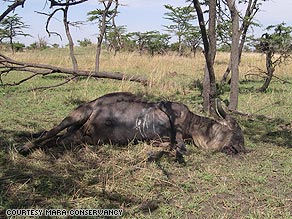
MASAI MARA, Kenya (CNN) -- The migration of over a million wildebeest between Kenya and Tanzania is one of the wonders of the natural world. Tourists from around the globe have flocked to Kenya to witness the herds streaming across the savanna and over the Mara River.

Poachers set steel snares amongst the thorn trees to capture wildebeest headed on their annual migration.

Poachers set steel snares amongst the thorn trees to capture wildebeest headed on their annual migration.

But now this annual migration is under threat from poachers. "When the animals come into Kenya there is this big influx of poachers," says Brian Heath, CEO of the Mara Conservancy that manages animal protection in the border regions of the park.

"Unless we control it we are in danger of the number of animals being poached not being able to sustain the population."

The conservation NGO depends on tourists to finance their anti-poaching operations. A portion of each tourist's entrance fee goes to their operations. They have had plenty of funding in normal years, but this is not a normal year in Kenya.

The political violence stemming from Kenya's disputed election caused visitors to cancel their trips or look elsewhere for their vacation. And though the country has been peaceful for months, the tourists have stayed away.

As a result, the Mara Conservancy is running at a massive shortfall and has had to scale back on anti-poaching efforts. The low numbers of tourists hurts the economy in Kenya, but it also puts the wildlife at risk. Video Watch how poaching is threatening the wildlife of the Masai Mara »

"If we cannot run our operations as normal, then we fear that poachers may invade the park, kill the animals and then at the end of the day we do not have animals. They will destroy the Mara," says Joseph Kimojino, one of the head rangers.

Don't Miss

It sounds alarmist, but the facts back him up. Every herd requires a critical mass to survive and to move. Experts believe that between 40,000 and 100,000 wildebeest are poached a year. If the poaching increases to a certain level, it could spell disaster.

"If the numbers of animals in the migration were to reduce below a certain number then that migration may not be sustained into Kenya," Heath warns. "And that would have a huge and devastating effect on Kenya's tourism." Video Watch astonishing footage of migrating wildebeest »

The rangers are after an elusive foe. The majority of the poachers come from Tanzania. They sneak over the fenceless border and hunt animals for bush meat. Video Watch David McKenzie's behind the scenes report on shooting this story »

During the migration, they set up snares made from steel wires. The snares are meant for the wildebeests, but they kill indiscriminately, tearing into the flesh of zebras, giraffes, hyenas and even elephants.

Though they have had to cut back on patrols, the rangers haven't given up yet.

Joseph Kimojino, after 20 years at the park, has started a blog to try and raise money for the anti-poaching efforts. Read Joseph Kimojino's blog

Ashcroft defends waterboarding before House panel

WASHINGTON (CNN) -- The controversial interrogation technique of waterboarding has served a "valuable" purpose and does not constitute torture, former Attorney General John Ashcroft told a House committee Thursday.

John Ashcroft says waterboarding yielded more valuable information than other interrogation techniques.

John Ashcroft says waterboarding yielded more valuable information than other interrogation techniques.

Testifying on the Bush administration's interrogation rules before the House Judiciary Committee, Ashcroft defended the technique while answering a question from Rep. Howard Coble, R-North Carolina.

"Waterboarding, as we all know, is a controversial issue. Do you think it served a beneficial purpose?" the congressman asked.

"The reports that I have heard, and I have no reason to disbelieve them, indicate that they were very valuable," Ashcroft said, adding that CIA Director George Tenet indicated the "value of the information received from the use of enhanced interrogation techniques -- I don't know whether he was saying waterboarding or not, but assume that he was for a moment -- the value of that information exceeded the value of information that was received from all other sources."

Waterboarding is a technique designed to simulate drowning. The agency has acknowledged using it on terror suspects. Some critics regard it as torture; others say it is a harsh interrogation technique, and proponents say it is a useful tool in the war on terror.

Ashcroft, who stated his opposition to torture, said the Justice Department has determined that waterboarding -- as defined and described by the CIA -- doesn't constitute torture.

"I believe a report of waterboarding would be serious, but I do not believe it would define torture," Ashcroft said, responding to questions from Rep. Maxine Waters, D-California.

He added, "the Department of Justice has on a consistent basis over the last half-dozen years or so, over and over again in its evaluations, come to the conclusion that under the law in existence during my time as attorney general, waterboarding did not constitute torture."

Waters asked Ashcroft whether such techniques would be regarded as "totally unacceptable and even criminal" if they were used on American soldiers.

"Well, my subscription to these memos, and my belief that the law provides the basis for these memos persisted even in the presence of my son serving two tours of duty overseas in the Gulf area as a member of our armed forces," Ashcroft said.

Rep. Steve Chabot, R-Ohio, asked Ashcroft how many times waterboarding had been performed. Ashcroft said that it's his "understanding it has been done three times" as part of an "interrogation process." He said he thinks the subjects of the interrogations "would be labeled as high-valued detainees."

The House of Representatives failed to muster the two-thirds majority it needed this year to override President Bush's veto of a bill that would have banned certain CIA interrogation techniques, including waterboarding.

The White House applauded the vote, saying an override "would have diminished the intelligence community's ability to protect our nation."

The bill was an effort to curtail the CIA's ability to use harsh interrogation techniques that the military and other law enforcement agencies ban. It would have restricted U.S. interrogators to techniques outlined in the Army Field Manual.

The White House said the restriction "would have eliminated the legal alternative procedures in place in the CIA program to question the world's most dangerous and violent terrorists."

Nigerian activists reject UK plan


File photo of Niger Delta militant
The solution to the Niger Delta crisis is development not arms, activists say

Human rights activists in Nigeria's Delta have condemned an offer from the UK government to provide military training to secure oil supplies.

British Prime Minister Gordon Brown offered military training to Nigeria's President Umaru Yar'Adua to help fight militants and oil smugglers.

But activists said more military action would result in more militant groups springing up to oppose it.

Mr Yar'Adua says there is a cartel dealing in "blood oil" from Nigeria.

He says this trade is behind much of the violence in the oil-producing Niger Delta.

Attacks on oil installations has been partly responsible for cutting Nigeria's production by about 25%.

NIGERIA'S OIL
35bn barrels in proven reserves
Daily capacity around 2m barrels of crude
Eighth largest exporter in the world
Estimates say another 100,000 barrels are stolen - worth $5.1bn at current prices
Source: Reuters

The Delta's most publically visible group, the Movement for the Emancipation of the Niger Delta (Mend) also condemned the UK's offer.

"Without justice, security and peace will be elusive. Mend will ensure that," spokesman Jomo Gbomo told the BBC.

"Mend is aware that its actions have forced the system to focus on the region and will continue our armed agitation side by side with talks until we achieve our objective."

Patrick Naagbanton, of the Centre for Environment, Human Rights and Development (CEHRD), said Mr Brown did not understand the problems of the Niger Delta.

"He's acting on the spur of the moment. He needs to have a better understanding of the situation,"

"It will just lead to a mushrooming of hardened armed groups."

Mr Brown also reaffirmed the UK's commitment to help Nigeria improve the accountability and transparency of government.

map

But Anyakwee Nsirimovu, of the Institute of Human Rights and Humanitarian Law (IHRHL) based in Port Harcourt said this offer was a "public relations exercise".

"It's a systemic failure. Government does not want to improve the capacity. They are deliberately running a one-party state with no alternatives.

"Until people can take a role in confirming or rejecting the people in power, it's just a PR exercise."

President Yar'Adua came to power last year in elections that were widely condemned by observers for not being free or fair.

The Delta region saw the worst of the rigging, with armed gangs stealing ballot boxes and intimidating voters.

'Positive statement'

But Dimieari Von Kemedi of the Bayelsa State government said focussing on the military aspect did not do justice to Mr Brown's offer.

"Overall, it's a positive statement that gives weight to dialogue and sustainable development," he said.

"There's nothing new in getting military help from Britain. Every country has a right to improve their military."

However, military training would not solve the problem of oil theft, he said.

"If the UK wants to help with that, Scotland Yard [police] - not the Ministry of Defence - would be the right people to do it."

Illegal oil

The oil smuggling industry is extremely profitable and involves highly placed corrupt politicians, military officers, government officials and oil company employees, human rights activists and oil analysts say.

Oil is stolen by breaking into pipelines and filling barges which then rendezvous with tankers on the high seas.

Consumers will benefit from bringing down the oil price. Anything that drives the price of oil down to help the British housewife
Patrick Dele Cole
Former minister

The illegal oil is then mixed with other legitimate cargoes and sold for an enormous profit by unscrupulous traders - who pay for the oil partly with weapons, analysts say.

Many armed groups in the Delta provide "security" for the smuggling rings, also known as "bunkerers".

The violence and lack of law and order in the region, caused by the sponsorship of armed youths by politicians, allows powerful people connected to bunkering to operate unhindered, activists say.

'Marked' crude

Niger Delta businessman and politician Patrick Dele Cole, a special adviser of former President Olusegun Obasanjo, says that the trade could be cracked by chemically marking crude to trace its origin.

Spy technology provided by the US and the UK could also be used to identify thieves, he said.

"We need the technology from the UK and the US and others to help us track these vessels. I know the government is interested in getting hold of drones like the UK and US are using in Afghanistan."

US attempts to form an African command for its military based in Nigeria have been rejected by President Yar'Adua's government.

But the UK is the former colonial power, and home base of the parent company of Nigeria's biggest oil producer Royal Dutch Shell.

Mr Dele Cole said Mr Brown's offer was aimed at helping oil consumers.

"Consumers will benefit from bringing down the oil price. Anything that drives the price of oil down to help the British housewife."

Mosques body to target extremism

By Dominic Casciani
BBC News

A mosque dome
There are more than 1,500 mosques in the UK
British Muslim leaders are to tell mosques to reform and modernise in a government-backed attempt to prevent extremism.

Four major Muslim organisations say they want mosques to sign up to a community watchdog with powers to launch spot checks on standards.

The body has been two years in the making amid difficult negotiations.

The draft guidelines published on Thursday are the most significant step yet by Muslims to regulate UK mosques.

Following the July 2005 suicide bombings in London, ministers asked Muslims to come up with ways to preventing extremism. One key recommendation was the creation of an independent community-led body to modernise more than 1,500 mosques.

Critics say many mosques fail to adequately serve local communities. Ministers believe mosques could be important in marginalising extremists recruiting young Muslims.

Two years on, the proposed Mosques and Imams National Advisory Board (Minab) says it has come up with minimum standards for Islamic institutions.

Key standards

The standards include counter-extremism programmes, community relations schemes, support and proper conditions for imams and greater condemnation of "un-Islamic" activity.

PROPOSED MOSQUE STANDARDS
Democratic and accountable
Transparent finances
Open to women and youth
Counter-extremism programmes
Inter-faith schemes
Work against forced marriage

Mosques will also be asked to let more women and young Muslims have a say, while Minab wants spot check powers to make unannounced visits to check standards.

Yousif Al-Khoei, one of the plan's joint architects, said there was unprecedented determination to make the body work.

"It's going to be quite a challenging task that we are embarking upon because this is something that has not been done before," said Mr Al-Khoei, a leading Shia Muslim.

"We are four different groups from different backgrounds and we believe we have managed over two years of hard negotiation to come up with something that will work."

Strong mosques will be better able to withstand attempts to hijack them
Communities Secretary Hazel Blears

The government is a key supporter of the body and has been pressuring Muslim leaders to get it up and running.

Communities Secretary Hazel Blears said it was government's job to support mosques rather than tell them what to do - but she urged them to "grasp the opportunity".

"The constitution and the standards being published today are a positive sign," said Ms Blears.

"It shows that Muslim communities want to make the changes that will build community cohesion and ensure that mosques are playing a role at the heart of communities.

"Strong mosques positioned at the centre of community, and effectively governed, will be better able to withstand attempts to hijack them by certain groups supporting violent extremist interpretations of Islam."

Mr Al-Khoei said he wanted to underline that the body was entirely independent, including a decision not to take core funding from either the British or foreign governments.

"Many people in the community will be suspicious and may fear the government wants to take over mosques. If we all work together then no government will have the will or the power to do so."

Sats mark appeals 'set to rocket'


Pupil writing
More results are due to be released on Friday

Head teachers are warning that the dispute over "Sats" results in England is likely to escalate, with predictions of record numbers of appeals this year.

Worries about the quality of marking will mean that appeals over test results are "almost certain to rocket" says heads' leader John Dunford.

As schools break up for summer, almost one in five primary schools still does not have a full set of marks.

The results for tests taken by 14-year-olds are also finally due out.

There have already been warnings that there will be delays in the delivery of the English test results for secondary schools - possibly until September.

Marking doubts

Dr Dunford, the general secretary of the Association of School and College Leaders, has added to concerns over this year's results by warning that many more schools would challenge them.

FROM THE TODAY PROGRAMME

"The government and Ofsted use the Sats results to make judgements about whether schools will fail their inspections and heads can lose their jobs as a result," he said.

"The results need to be accurate and schools will be much angrier at lack of accuracy than delay.

"Results will be scrutinised this year as never before and the number of appeals is almost certain to rocket."

Complaints

The scale of the delays in primary schools has become clearer - and it is affecting more schools than was at first apparent, with about one in five still missing results, according to the Qualifications and Curriculum Authority (QCA).

On Monday, QCA chief executive Ken Boston assured MPs that marking for the primary school tests was "100% complete in all subjects" and that 94% of English, 97% of maths and 97% of science results were ready for publication the next day.

But further unmarked scripts have been found and there have been complaints of pupils wrongly recorded as being absent.

As such, many pupils will go home for the summer not knowing how they fared in tests in May for which they spent so much time preparing.

There have been concerns that the lack of end of primary school results could disrupt secondary schools' plans for putting pupils into ability groups when they enter their new schools in September.

There have also been concerns that the failure to deliver test results for 14-year-olds will complicate plans for GCSE choices, which will be needed for courses to begin in September.

Schools Secretary Ed Balls said the situation was "unacceptable" and has instigated an inquiry, to be led by a former Ofsted chief, Lord Sutherland.

'Serial incompetence'

Shadow children's secretary Michael Gove said ministers should end the contract with ETS before next year's tests.

Head teacher Janis Burdin questions the quality of marking'

"ETS have forfeited the right to run future Sats tests. Every day brings new evidence of their serial incompetence," he said.

"Ministers must act now to ensure next year's exams are run properly.

"That means guaranteeing that a proper team to supervise the process is in place as soon as possible."

Questions were raised on Thursday over the quality of work carried out by ETS, with teachers complaining of "erratic" marking.

Some schools also said papers had been returned unmarked and others said pupils who had sat the tests had been marked as absent.


Keep letting us know of your experiences, using the form below:

We have received a poor service from ETS. All our Maths Paper B's had not been totalled on their front pages (this always takes place). Of the four papers I have checked two have been incorrectly totalled.

I am planning to spend part of the Summer holiday checking all the papers. This is not an acceptable state of affairs. Richard Lane,

Head Teacher
Tamworth Staffordshire

Having received English SATs papers back today, we immediately noticed a discrepancy between teacher assessments and test marks. On closer inspection we noted that pupils were routinely scoring no marks for spelling on the writing paper, despite very few or no spelling errors. The marker appeared to have little understanding of what composition and effect was, or how to reward for use of adverbial and noun phrases. Similarly in the reading paper, pupils who fully answered the Shakespeare question, pedestrianly but without any inaccuracy, using appropriate quotations, were still marked in the bottom two bands. As a previous SATs marker, I re-marked a random sample to find, in the 5 papers I looked at, that children received on average 8 marks lower than I would have awarded as an "A" grade marker. How can we use these results as a reflection of children's ability when the markers themselves lack the ability to apply the mark scheme? I do not believe for one moment a practising English teacher marked these papers!
Lucy Eastwood, Huddersfield, England

It is twenty to eleven at night and I'm re-marking English KS3 SATS Writing papers. Why? Because when looking through a few papers at random when they arrived late this afternoon, I was instantly appalled at the poor standard of marking. Halfway through my pile of the most suspect papers, the vast majority, in my humble opinion, have been incorrectly marked, with just over a third of the papers marked so badly that they are wrong by an entire level.

I'm so angry about this whole debacle. Our students have worked very hard (as have our department) in difficult circumstances (BSF) and are eager to learn their level. How are we supposed to reveal to our hopeful students that their classwork and their exam paper may show level 5 / 6 / 7 skill but the marker feels they only deserve a 4 / 5 or even worse an N.

Worse still, we have papers missing so are unable to even get an accurate view on our percentage of Level Fives and above, even if the marking were accurate....
Claire, Manchester, UK

My school is still waiting for the Science papers to arrive. Just under half of the pupils (26) have not had their Science marks published. No real explanation has been given. One ETS official on the phone stated that updating could take as long as the 25th July. This outcome has had such a detrimental effect on school life, such as pupils' attitude to learning/ the celebration of outstanding teaching. For so many schools, and in particular year six, there was so much to celebrate this year and this has been missed. What is even more disappointing is how far senior officials remove themselves from such situations when things go wrong.
Kenneth Judd, Leicester City

I have marked key stage 2 maths since they were introduced and my experience this year was no worse than in any other. Yes I did receive the papers a few days later than normal and yes there were minor problems using the software but everything else went like clockwork and we were paid quickly and at regular intervals which hasn't happened in previous years.
Mrs J Roberts, uk

The mystery of why schools have received some papers unmarked is not a mystery. I am a team leader and led 9 new markers through the process. If pupils were registered as absent then markers could not input their marks on line even tho it was obvious they were not absent as markers had the papers. Ets failed to update the on line verification registers so markers knew they could not feed those marks in. Feeding the marks in was the trigger for markers to receive payment for what they had marked so they were not going to mark papers that they could not be paid for and they couldnt be paid as the children were still registered as absent--right to the end--and they couldnt feed the marks in. So they sent the papers back unmarked. An absolute fiasco and shambles and devastating to markers who met their deadlines, were failed by ets and devastating to all y6 teachers and children who slave all year re sats to fulfil League tables. A disgrace to all concerned and those in charge should resign.
Mrs S A lawrence, Chester uk

I have just read about the Moss Side Primary School's experiences. I have the same at my school in Darlington. One of our Y6 pupils has been marked as level 4b in writing. He can hardly write his name without help let alone write a story. Teacher assessment was 2c. He got 2b in Maths and 2c in Science which fits the pattern. I have looked, along with the teacher, at his test papers and we have come to the conclusion that he should have obtained a 2c for writing, the same as the teacher assessment. The Y6 teacher will be going through all the papers (we apear to be lucky in getting them back)to compile our own results and THESE will be sending along with the official data to his Secondary School to help them with setting for September. The whole process has become a not-so-funny joke and does no credit to our education system as it is at the moment.
Steven Storey, Northallerton - UK

We are one of the '20' schools to have over half of our children marked absent. Would anyone else like to declare themselves and we could start an on-line count? Fiasco from start to finish. Anyone fancy a boycott next year! We could all refuse to cooperate with ETS from Septmeber for next year's cohort of children. My children can't understand how all of their hard work has resulted in nothing but excuses. Ed Balls-up, you can visit and explain if you like!
Glyn Ellis, Haslingden, Rossendale

We have checked our English scripts very carefully. The marking is so bad that I am simply going to send them all back to ETS and demand that they are re-marked correctly. I wouldn't expect such poor assessments from my own staff so I have no intention of accepting it from a national agency, particularly when so much hangs on the outcome.It's high time that this entire charade was abandoned.
Mike Garland, Ipswich, England

I am a marker for the KS2 science sats this year, as a 4th year I have found the ETS system chaotic, although the first year online. I had schools with children present that were absent and when chased up were confirmed as absent. As a teacher I know the online system was 'down' and schools could not input their data. I marked an entire school not on my allocation but was so concerned about the children not recieving their results that I downloaded the individual pupil mark sheets and completed and printed them out and included them in the box. I worked hard and ensured my papers were completed by the deadline and find the media press does not include the markers that DID do their job!! Some schools must be happy with their results.
Clair, Manchester

I am an experienced marker of Key Stage 2 Maths tests for 11 year olds, having marked every year since the SATs were introduced in 1995. I am retired after a career as a primary school teacher, the last 21 of which as a Headteacher. In the past schools have sent children's tests directly to the marker, who returned them to the schools on completion of marking. This always worked efficiently in my experience.

This year ETS decided that all papers should be collected from schools and taken to a central warehouse in Yorkshire. The plan was to distribute them to markers from there. My experience was training on 17 May; receipt of papers June 12. I would normally receive them within 48 hours of being administered. Result; pressure to mark them in time. I did so methodically and I hope to a high standard. There were many problems with online recording of marks and pupils attendance, but I believe the biggest ,mistake was to alter the method of sending papers to markers.
Mr Robin Barnett,

With the league table obsession of the current government, I as a Head of English have to take responsibility for the achievement of students. How can I a) analyse the attainment and find areas for improvement for my team, b) face the students with results that by now will not be trusted especially after they have worked so hard? If every child does truly matter to this government they would not put our children through this debacle!
Jacques Mostert, Leyton

I teach in a small primary school which this year had a Yr 6 cohort of just 13, of whom 12 were eligible for SATs. We received the marked papers and the thresholds last week; on checking the maths papers, we found that 5 out of the 12 papers were incorrectly marked, with mistakes including incorrect totalling of marks, pages left unmarked, correct questions marked wrong and incorrect questions marked right, although the final total in this latter case was correct.

I am concerned that, with so many errors, we had the papers returned to us with the thresholds and now have to request a 'review' if we dispute the results. How do the markers ensure the integrity of the review system when, theoretically, it is possible for those with access to the papers to alter them before requesting a review?

In our school this year, each child carried over 7% and this could be critical when results are published in league tables.

Also, I notice that, for the first time, schools will incur a cost for reviews if they are not successful and this would add up to a significant amount for larger schools requesting reviews for whole cohorts of 60 plus children. If a charge is to be incurred, then schools and staff need to have faith that the marking system is rigorous and consistent.

This new system and the company running it has lost all credibility and I will have no faith in it should it still be in existence next year.
Ruth Carty, Titchfield, UK

HOT INFO :
Ads By Google